
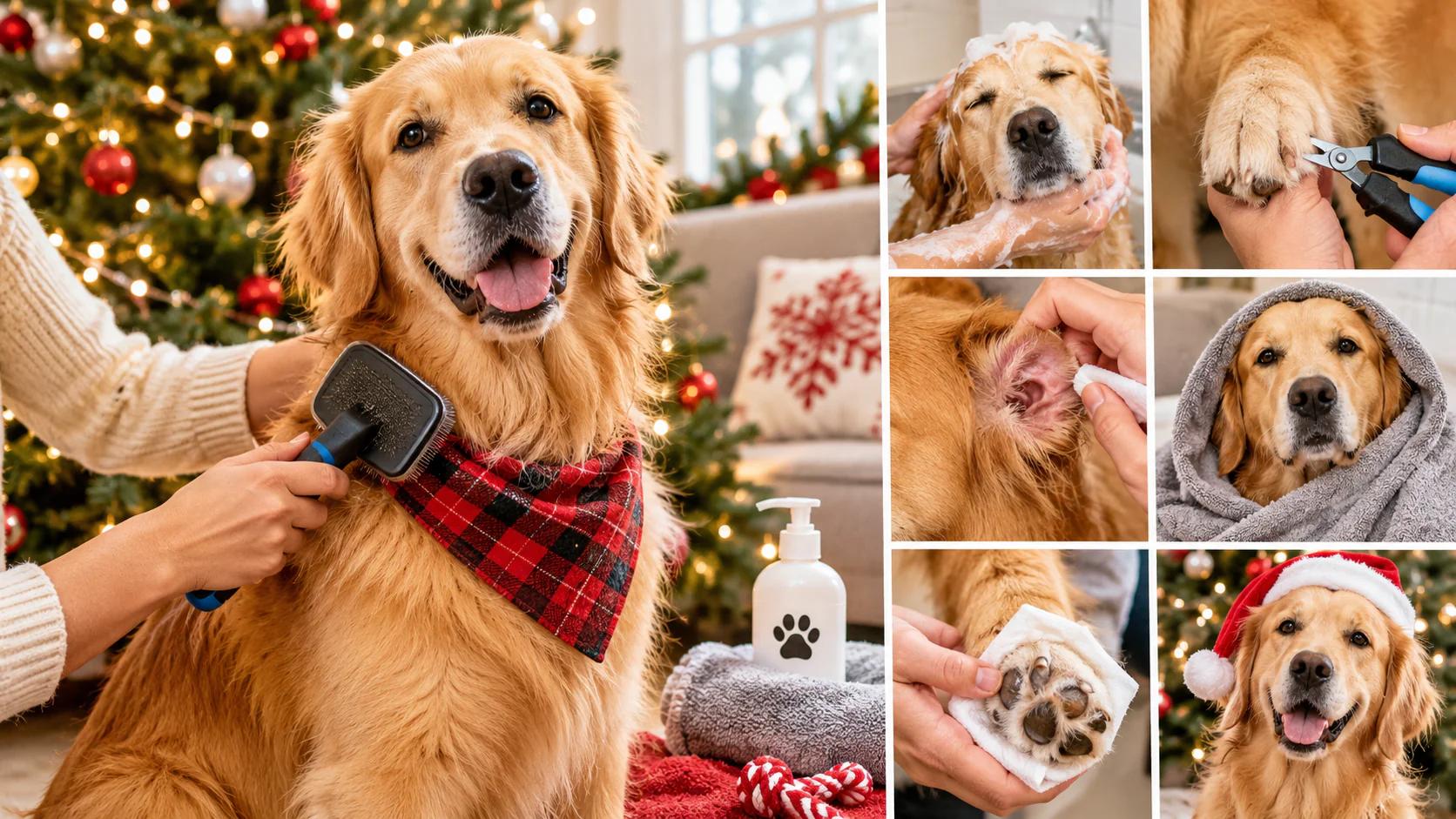
Winter Dog Grooming Tips: 7 Easy Ways to Keep Your Dog Clean, Healthy & Holiday-Ready
Winter brings cozy evenings, festive decorations, family gatherings, and plenty of memorable moments with our dogs. However, colder weather can also create a few grooming challenges. Dry indoor air, muddy walks, wet fur, and road salt can affect your dog’s coat, skin, and paws during the colder months.
Many dog owners assume that grooming becomes less important in winter, but maintaining a regular routine is just as necessary as it is during warmer seasons. Your dog still needs brushing, occasional baths, nail care, and attention to areas that collect dirt and moisture.
The good news is that keeping your dog clean and comfortable does not require an expensive grooming appointment every week. A few simple habits at home can make a noticeable difference.
Whether you are preparing your pup for Christmas photos, welcoming guests, or simply trying to keep your home cleaner, these seven winter dog grooming tips will help you build a practical routine that suits your dog’s needs.
Why Is Winter Grooming Important for Dogs?
Cold weather can change the way dogs experience everyday grooming. Some dogs develop dry skin because of low humidity and indoor heating, while others collect mud, moisture, and debris on their coats during outdoor walks.
Regular grooming helps you manage these seasonal challenges and notice small changes before they become bigger problems.
Here are a few reasons winter grooming deserves attention:
- Keeps the coat manageable: Regular brushing removes loose hair, dirt, and small tangles before they develop into painful mats.
- Supports comfortable skin: Gentle bathing and proper drying help prevent unnecessary irritation caused by trapped dirt or moisture.
- Protects paws: Snow, road salt, ice, and outdoor debris can irritate sensitive paw pads.
- Maintains basic hygiene: Clean ears, trimmed nails, and a well-maintained coat contribute to your dog’s everyday comfort.
- Makes holiday preparations easier: A consistent grooming routine helps your dog look neat and feel comfortable during family gatherings and Christmas celebrations.
Not every dog needs the same grooming schedule. Breed, coat length, activity level, age, and skin condition all influence how much care is necessary.
7 Easy Winter Dog Grooming Tips
1. Brush Your Dog’s Coat Regularly
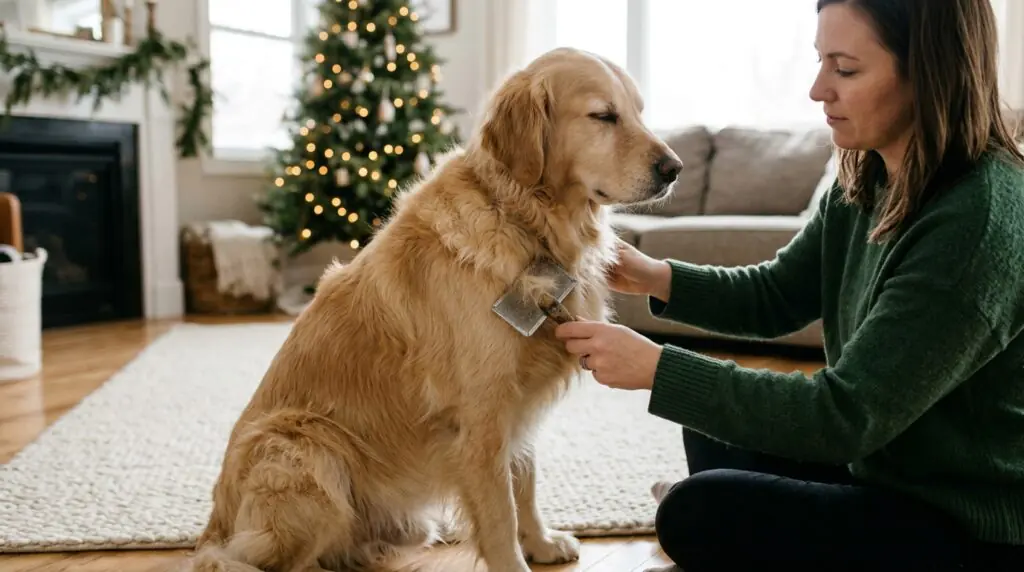
Regular brushing is one of the easiest ways to keep your dog’s coat in good condition throughout winter. Even dogs that spend most of their time indoors can develop tangles, loose hair, and dirt buildup.
When loose hair remains trapped in the coat, it can mix with dirt and form knots. These knots may become uncomfortable, especially behind the ears, under the legs, around the collar, and near the tail.
Brushing helps remove loose fur while allowing you to check your dog’s skin for unusual dryness, redness, or irritation.
How to brush your dog properly:
- Choose a brush that matches your dog’s coat type.
- Start with gentle strokes, especially if your dog is not used to regular brushing.
- Work in small sections rather than brushing the entire coat quickly.
- Pay attention to areas where tangles commonly form.
- Use a suitable comb to check whether longer hair is completely free of knots.
- Reward your dog with praise or a small treat to make grooming a positive experience.
Choose the right brush for your dog’s coat:
Different coat types require different grooming tools. A short-haired dog may need only a soft brush or grooming mitt, while a long-haired dog may benefit from a slicker brush and metal comb.
For thick or double-coated breeds, use grooming tools designed to remove loose undercoat without damaging the healthy outer coat.
How often should you brush your dog in winter?
Short-haired dogs may need brushing once or twice a week, while long-haired and curly-coated dogs often require more frequent attention. Some coats need daily brushing to prevent matting.
The best schedule depends on how quickly your dog’s coat tangles and how much maintenance its breed requires.
2. Give Your Dog a Proper Winter Bath
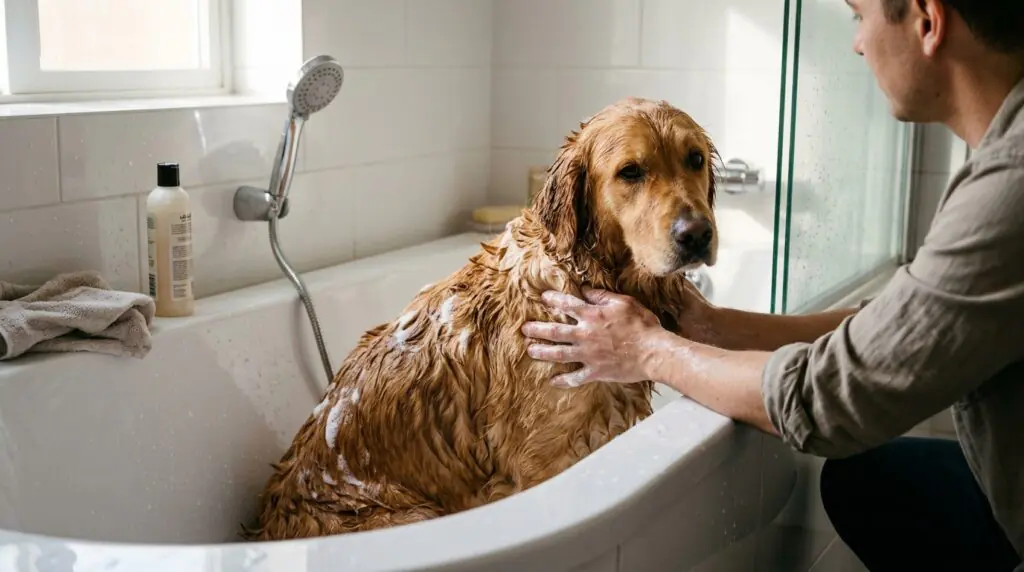
A clean coat helps your dog feel comfortable, but winter bathing requires a little extra care.
Your dog may not need baths as frequently during colder months, particularly if it spends most of its time indoors. However, skipping baths completely is not necessary. Mud, dirt, unpleasant odors, and outdoor debris can still accumulate in the coat.
The goal is to bathe your dog when it actually needs one rather than following an unnecessarily strict schedule.
Follow these simple bathing steps:
- Brush your dog before bathing to remove loose hair and easy-to-remove tangles.
- Prepare a warm indoor space with a comfortable temperature.
- Use lukewarm water rather than hot or cold water.
- Wet the coat gently, avoiding direct water pressure around the face and ears.
- Apply a suitable dog shampoo and massage it gently into the coat.
- Rinse thoroughly to remove all shampoo residue.
- Use a clean towel to absorb excess water.
Avoid bathing your dog too frequently. Excessive washing can remove natural oils from the skin and coat, potentially contributing to dryness and irritation.
Bathing needs vary depending on coat type, skin condition, lifestyle, and veterinary recommendations. Dogs with skin conditions may need a specific bathing schedule or medicated shampoo prescribed by their veterinarian.
3. Use a Gentle, Dog-Safe Shampoo
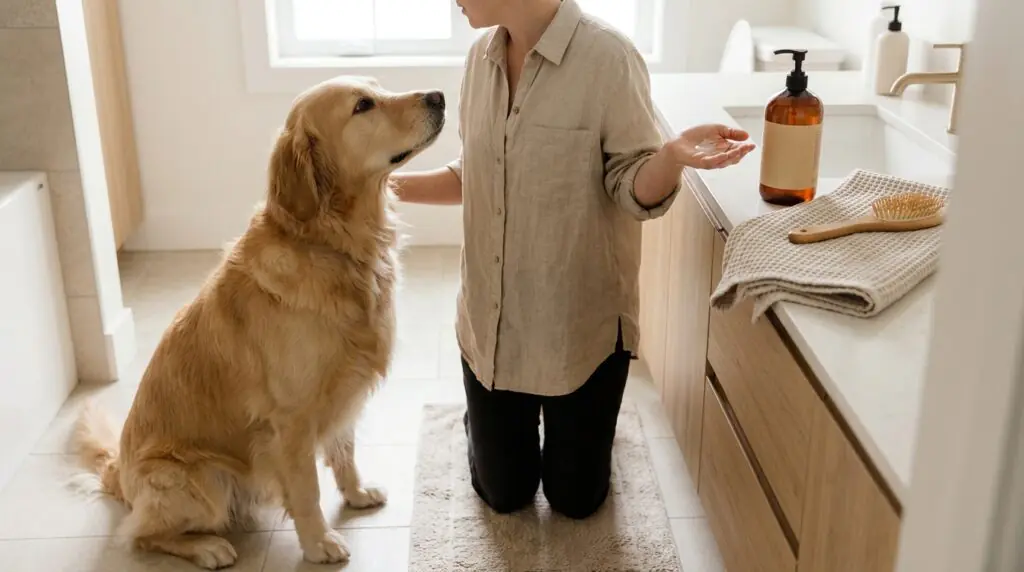
Choosing the right shampoo is an important part of winter grooming. A product that works well for people is not necessarily suitable for dogs.
Dogs have different skin characteristics from humans, and human shampoos may disrupt the natural balance of their skin. This can contribute to dryness or irritation.
Instead, choose a shampoo specifically formulated for dogs.
What to look for when choosing a dog shampoo:
- A gentle formula suitable for your dog’s skin and coat.
- Products designed for sensitive skin if your dog is prone to irritation.
- Moisturizing ingredients when appropriate for your dog’s skin condition.
- A formula recommended by your veterinarian if your dog has allergies or a diagnosed skin problem.
Avoid heavily fragranced products, harsh cleaning products, and shampoos containing ingredients that may irritate your individual dog’s skin.
You should also avoid using essential oils or homemade shampoo mixtures without veterinary guidance. Natural does not automatically mean safe for pets.
A helpful tip: If your dog frequently scratches, develops redness, or has flaky skin, do not simply keep changing shampoos. These signs can have several causes, including allergies, parasites, and skin infections. Ask your veterinarian for advice.
4. Dry Your Dog Thoroughly After Bathing
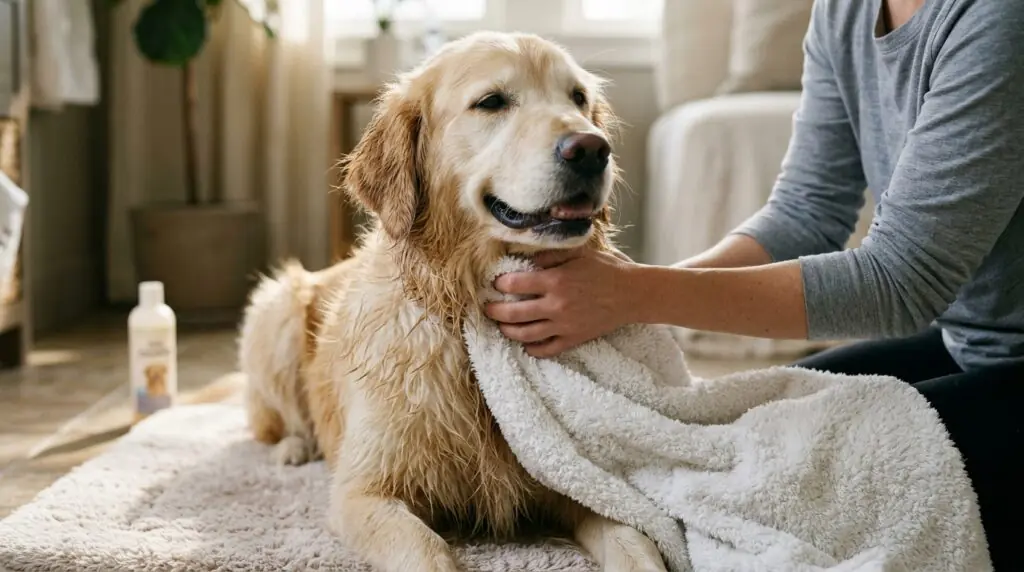
Drying is especially important during winter. Leaving your dog with a wet coat can make it uncomfortable in a cool environment, particularly if it has thick or long fur.
Moisture can also remain trapped close to the skin in dense coats, creating an environment where irritation may develop.
A little patience after bathing can make the entire grooming process safer and more comfortable.
How to dry your dog properly:
- Begin by gently squeezing excess water from the coat with your hands.
- Use an absorbent microfiber towel to remove as much moisture as possible.
- Avoid rubbing aggressively, as this can create tangles and irritate the skin.
- Pay extra attention to areas such as the chest, belly, legs, and spaces between the toes.
- Allow your dog to finish drying in a warm, draft-free indoor area.
If you use a hair dryer, choose a pet-safe dryer or a suitable low-heat setting. Keep it at a comfortable distance, continuously move the airflow, and check the temperature with your hand.
Never direct hot air toward one area for an extended period. Some dogs become frightened by dryer noise, so introduce it gradually and stop if your dog shows signs of distress.
Remember: Your dog should be comfortably dry before spending time outdoors in cold weather.
5. Keep Your Dog’s Paws Clean and Protected
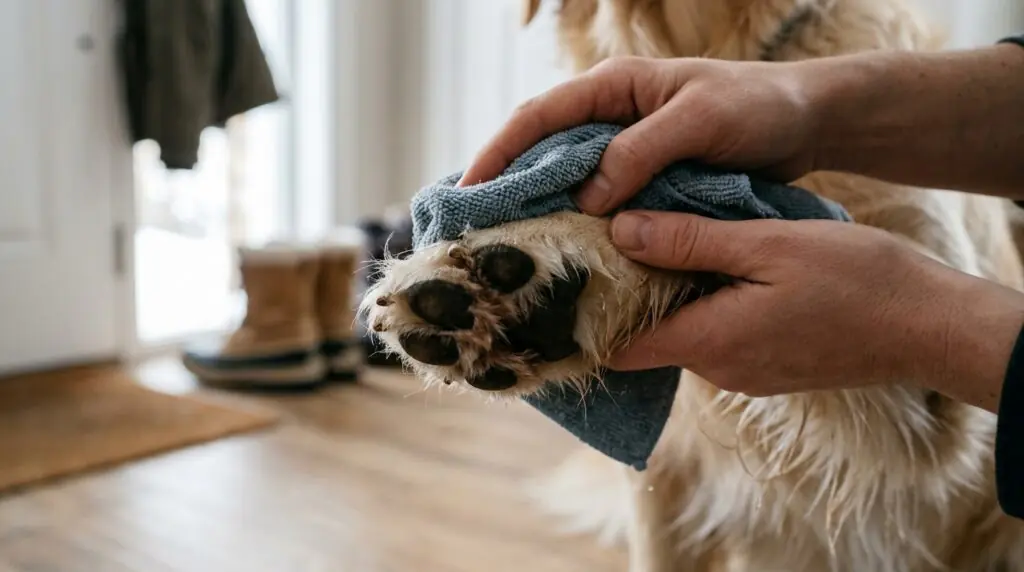
Paw care is one of the most important parts of winter grooming, especially for dogs that regularly walk on snowy, icy, or salted surfaces.
Road salt and chemical ice melters can irritate paw pads. Small pieces of ice, mud, and debris can also become trapped between the toes, particularly in dogs with longer hair around their feet.
A simple paw-cleaning routine after walks can help prevent these problems.
How to care for your dog’s paws during winter:
Clean after every outdoor walk: Use a soft, damp cloth or lukewarm water to remove mud, salt, and outdoor residue from the paws.
Check between the toes: Look for small stones, ice, dirt, or other debris that may become trapped between the paw pads.
Inspect the paw pads: Check for unusual redness, cracks, swelling, cuts, or signs of discomfort.
Keep excess paw hair manageable: Long hair around the feet can collect mud and snow. Ask a professional groomer to trim excess hair when needed, without cutting too close to the skin.
Consider dog-safe paw balm: A pet-specific paw balm may help protect dry paw pads. Choose a product intended for dogs and prevent your pet from licking large amounts of it.
Consider winter dog boots: Properly fitted dog boots can provide an additional barrier against snow, ice, and road salt. Introduce them gradually so your dog has time to become comfortable wearing them.
If your dog repeatedly licks its paws, limps, or develops painful cracks, consult a veterinarian rather than assuming the problem is simply dry skin.
6. Trim Your Dog’s Nails and Maintain Basic Hygiene
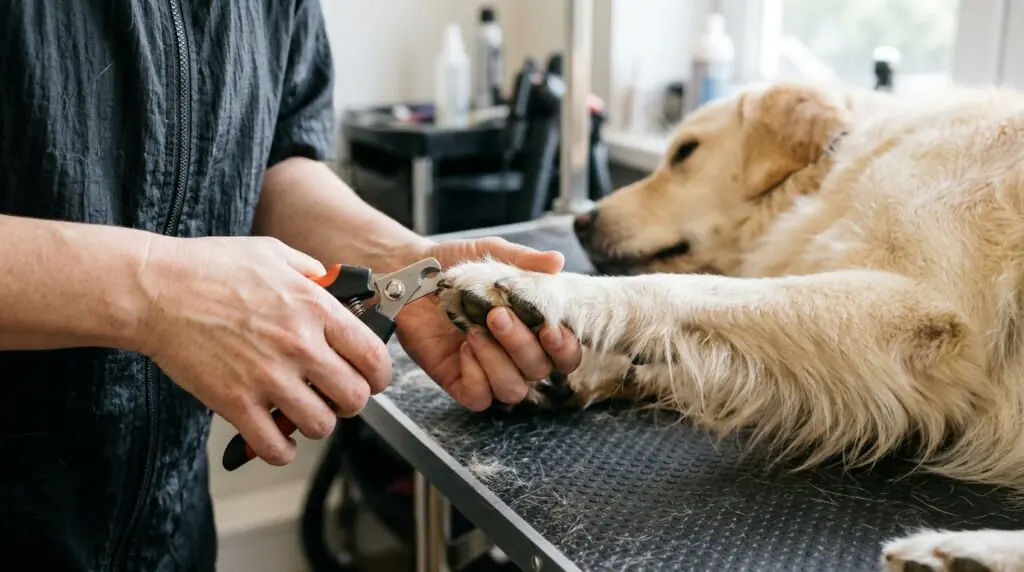
Winter walks may be shorter for some dogs, which can mean less natural nail wear. As a result, nails may become longer and require more frequent attention.
Overgrown nails can affect the way a dog places its feet and may cause discomfort while walking.
Winter is also a good time to check other areas that are easy to overlook during everyday grooming.
Nail care
Check your dog’s nails regularly. If they are touching the floor or making noticeable clicking sounds while walking on a hard surface, they may need trimming.
Use nail clippers designed for dogs and remove only small amounts at a time. Be careful not to cut the quick, the sensitive part of the nail containing blood vessels and nerves.
If your dog’s nails are dark and you cannot easily identify the quick, or if your dog becomes anxious during trimming, consider having a professional groomer or veterinarian handle the job.
Ear care
Check your dog’s ears for unusual odor, redness, excessive wax, or discharge.
Clean only the areas you can see using a suitable dog ear-cleaning product and follow its instructions. Avoid inserting cotton swabs or other objects deep into the ear canal.
If your dog frequently shakes its head, scratches its ears, or shows signs of pain, contact your veterinarian.
Eye area
Some dogs develop tear stains or collect small amounts of discharge around their eyes.
Use a soft, clean, damp cloth to gently wipe away dirt from the surrounding fur. Avoid putting ordinary cleaning products or shampoo near the eyes.
Persistent discharge, redness, swelling, or squinting should be checked by a veterinarian.
Dental hygiene
Winter is also a good opportunity to maintain your dog’s dental routine. Regular brushing with a dog-specific toothbrush and toothpaste helps reduce plaque buildup.
Never use human toothpaste, as some products contain ingredients that are unsafe for dogs.
7. Maintain Your Dog’s Coat Without Over-Trimming
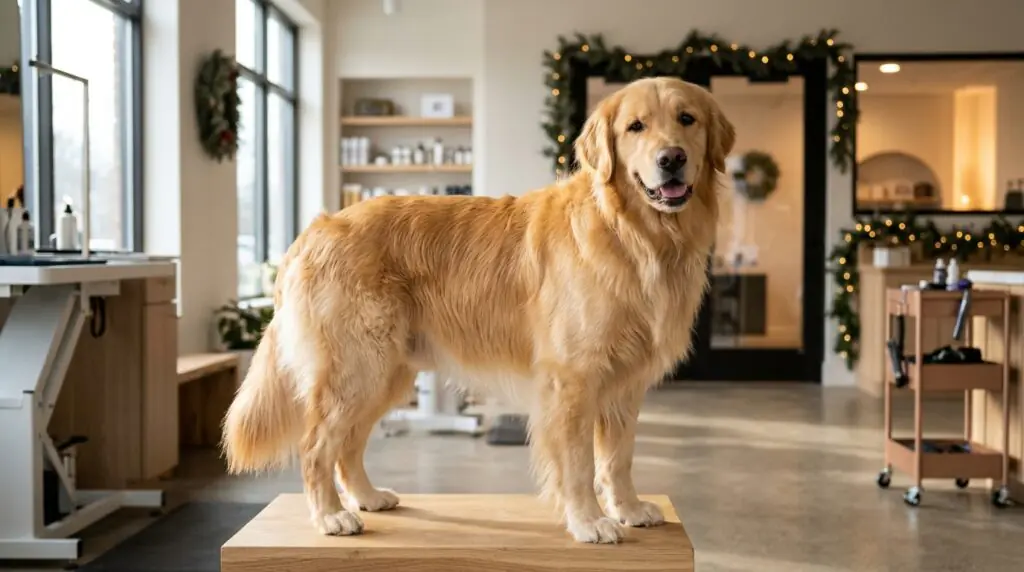
One common winter grooming mistake is removing too much of a dog’s natural coat.
Some breeds have a double coat consisting of a protective outer layer and a softer insulating undercoat. This coat structure helps regulate temperature and provides protection from environmental conditions.
Breeds such as Golden Retrievers, Siberian Huskies, German Shepherds, and Pomeranians have double coats that require appropriate grooming.
Shaving these dogs down to the skin simply because their fur looks thick is generally not recommended. It can interfere with the coat’s natural protective function and may affect how it grows back.
How to maintain your dog’s coat during winter:
- Brush regularly to remove loose undercoat and prevent mats.
- Keep the coat clean and free from trapped dirt.
- Avoid unnecessary shaving or extremely short haircuts.
- Ask a professional groomer about suitable trimming for your dog’s breed.
- Keep long hair around the feet and sanitary areas neat when appropriate.
Single-coated dogs and breeds with continuously growing hair may have different grooming requirements. Some may need regular professional haircuts throughout the year.
A useful reminder: There is no single winter haircut that works for every dog. Consider the breed, coat structure, lifestyle, and individual needs before making grooming decisions.
Common Winter Dog Grooming Mistakes to Avoid
Even well-meaning dog owners can make small grooming mistakes that affect their pets’ comfort. Avoiding these common problems can make your winter routine much easier.
Bathing too frequently: Washing your dog too often may contribute to dry skin. Follow a bathing schedule suited to your dog’s coat and skin condition.
Leaving the coat damp: Moisture trapped in thick fur can cause discomfort and contribute to skin problems. Dry your dog thoroughly after bathing.
Ignoring regular brushing: Long or thick coats can develop mats quickly, even when the weather is cold.
Shaving double-coated breeds: Removing too much of a protective coat can interfere with its natural function.
Using human grooming products: Human shampoo and toothpaste are not suitable substitutes for products formulated for dogs.
Forgetting paw cleaning: Road salt, mud, and ice-melting chemicals should be removed after outdoor walks.
Ignoring changes in the skin: Persistent scratching, redness, unusual odor, or hair loss should not be treated as ordinary winter dryness without proper assessment.
Essential Dog Grooming Tools for Winter
You do not need a professional grooming salon at home to maintain a basic winter routine. A few suitable tools can help you keep your dog’s coat and hygiene under control.
| Grooming tool | What it is used for |
|---|---|
| Slicker brush | Removing loose hair and managing tangles in suitable coat types |
| Soft-bristle brush | Gentle brushing for many short-haired dogs |
| Metal comb | Checking for knots and tangles |
| Dog shampoo | Cleaning the coat with a dog-specific formula |
| Microfiber towel | Absorbing excess water after bathing |
| Dog nail clippers | Maintaining comfortable nail length |
| Dog-safe paw balm | Helping protect dry paw pads |
| Dog toothbrush and toothpaste | Supporting regular dental hygiene |
Choose tools according to your dog’s size, coat type, and comfort. A tool that works well for a long-haired breed may not be necessary for a short-haired dog.
If you are unsure which brush or grooming equipment to purchase, a professional groomer can help you select appropriate options.
Winter Dog Grooming Checklist
A simple checklist can make it easier to stay consistent, especially when the holiday season becomes busy.
Daily grooming tasks
- Check paws after outdoor walks.
- Remove visible dirt and debris.
- Wipe muddy feet before your dog enters the house.
- Check for unusual scratching or skin irritation.
Weekly grooming tasks
- Brush the coat according to its grooming needs.
- Check for tangles behind the ears and around the legs.
- Inspect nails and paw pads.
- Check the ears and eyes for visible dirt or unusual changes.
Before Christmas
- Give your dog a bath if needed.
- Brush and tidy the coat.
- Check nails and basic hygiene.
- Clean the paws.
- Choose comfortable, properly fitted festive accessories.
- Prepare a clean and comfortable space for holiday photos.
This checklist is a general guide rather than a strict schedule. Some dogs need daily brushing, while others require less frequent grooming. Adjust the routine to suit your pet.
Frequently Asked Questions
Should I bathe my dog during winter?
Yes, you can bathe your dog during winter when necessary. Use lukewarm water, a suitable dog shampoo, and a warm indoor space. Make sure the coat is completely dry before your dog goes outside in cold weather.
How often should I brush my dog in winter?
Brushing frequency depends on coat type. Short-haired dogs may need brushing once or twice a week, while long-haired, curly-coated, and thick-coated dogs may require brushing several times a week or even daily.
Is it safe to trim a dog’s hair during winter?
Yes, appropriate trimming is generally fine. However, avoid removing too much hair from breeds that rely on their natural coat for protection. A professional groomer can recommend a suitable trim for your dog’s coat type.
Should I shave my dog before Christmas?
Not necessarily. Shaving is not required simply to make your dog look neat for Christmas. For double-coated breeds, unnecessary shaving is generally discouraged. Regular brushing and suitable trimming are often better options.
How can I protect my dog’s paws in winter?
Clean your dog’s paws after outdoor walks to remove salt, mud, and debris. Check between the toes for trapped ice and use suitable dog boots or pet-specific paw balm when appropriate.
Can I use human shampoo on my dog?
It is better to use shampoo specifically formulated for dogs. Human shampoo may not be suitable for canine skin and can contribute to irritation or dryness.
How do I keep my dog looking clean for Christmas photos?
Brush your dog’s coat, gently clean the face and paws, and make sure the fur is dry and free of tangles. Choose comfortable festive accessories and allow your dog to take breaks during the photo session.
Final Thoughts: Keep Your Dog Clean and Comfortable This Winter
Winter grooming does not have to be complicated. A consistent routine of brushing, occasional bathing, proper drying, paw cleaning, nail care, and coat maintenance can help your dog stay comfortable throughout the colder months.
The most important thing is to understand that every dog has different grooming needs. A fluffy Golden Retriever, a short-haired Beagle, and a curly-coated Poodle will not require exactly the same routine.
Start with the basics, choose grooming products suitable for your dog’s coat and skin, and pay attention to any unusual changes. If a grooming concern persists, your veterinarian or a qualified professional groomer can help.
With a little extra care, your dog can stay clean, comfortable, and ready to enjoy all the special moments of the Christmas season with the family.