
6 Christmas Dangers for Dogs Every Owner Should Know About
Christmas is a happy time, but for dogs your home suddenly fills with new smells, shiny objects and rich food. To a curious dog, a lot of it looks like a toy or a snack. Vets often see a rise in emergency visits during the holidays for this reason.
The good news is that most of these problems are easy to prevent once you know what to watch for. Here are six common Christmas dangers for dogs and what to do about each one.
1. Chocolate
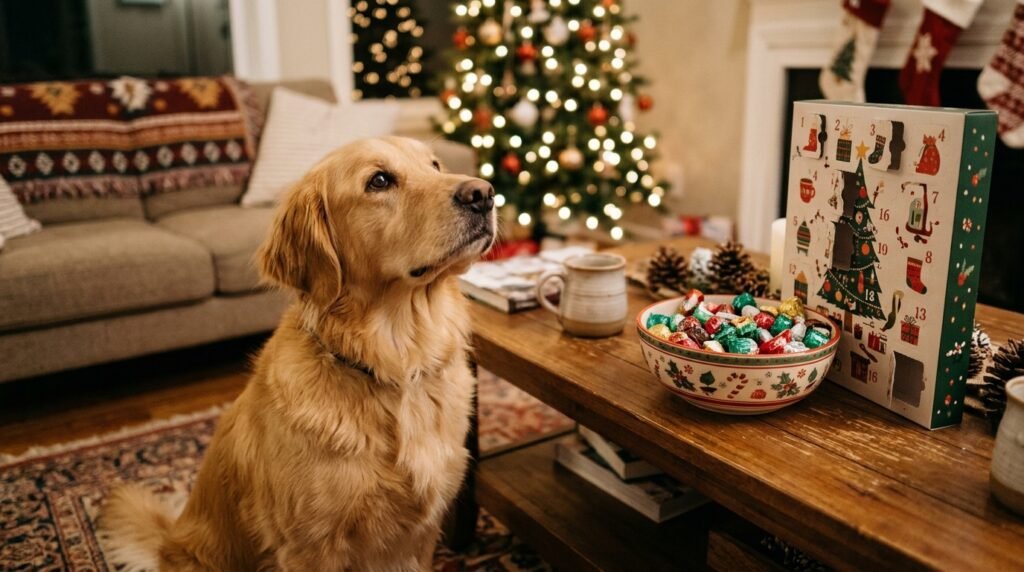
Chocolate is one of the most common holiday dangers. It contains theobromine, which dogs cannot process well. The darker the chocolate, the more dangerous it is. Baking chocolate and dark chocolate are the worst, while milk chocolate is less toxic but still a problem in larger amounts.
During Christmas, chocolate is everywhere: advent calendars, gift boxes, stockings, candy dishes and chocolate-covered treats on low tables.
What to do:
- Keep all chocolate on high shelves or inside closed cupboards.
- Remind guests not to leave bags or gifts with sweets on the floor.
- Never share chocolate “just a little bit,” even if the dog begs.
Warning signs: vomiting, diarrhea, restlessness, fast breathing, shaking or a racing heartbeat. If your dog eats chocolate, call your vet right away. Tell them the type of chocolate, how much, and your dog’s weight.
2. Tinsel, Ribbons and Gift Wrap
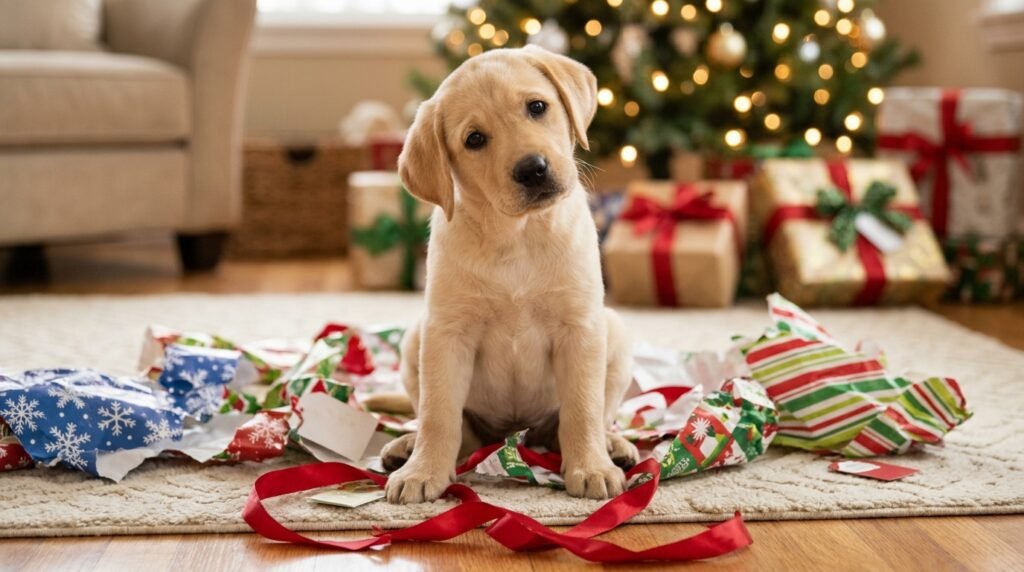
Tinsel is shiny, it moves, and dogs love to grab it. The problem is that if swallowed, long strands can get stuck in the intestines and cause a serious blockage that often needs surgery. Ribbons, string and wrapping paper can do the same thing.
What to do:
- Skip tinsel completely if you have a dog. It is not worth the risk.
- Use wide fabric ribbons instead of thin curling ribbon, and keep them out of reach.
- Clean up wrapping paper as soon as gifts are opened.
- Don’t leave wrapped gifts under the tree, especially ones that smell like food or treats.
Warning signs: repeated vomiting, not eating, belly pain, no bowel movements, or a piece of string hanging from the mouth or back end. Never pull it out yourself, because that can cause more damage. Go to a vet.
3. The Christmas Tree
The tree itself is full of small dangers.
- Tree water: The water in the stand can contain bacteria, sap or preservatives. If your dog drinks it, it may cause an upset stomach.
- Pine needles: Needles can irritate the mouth and stomach, and sharp ones may poke the gut if swallowed in large amounts.
- Lights and cords: Chewing on wires can cause painful mouth burns or electric shock.
- Tipping over: An excited dog or wagging tail can knock the whole tree down, which can hurt your dog and break ornaments.
What to do:
- Cover the tree stand with a tree skirt or a lid so your dog can’t reach the water.
- Secure the tree to a wall or ceiling hook so it can’t fall.
- Tape electrical cords down or use cord covers, and unplug the lights when you’re not home.
- Sweep up fallen needles every day.
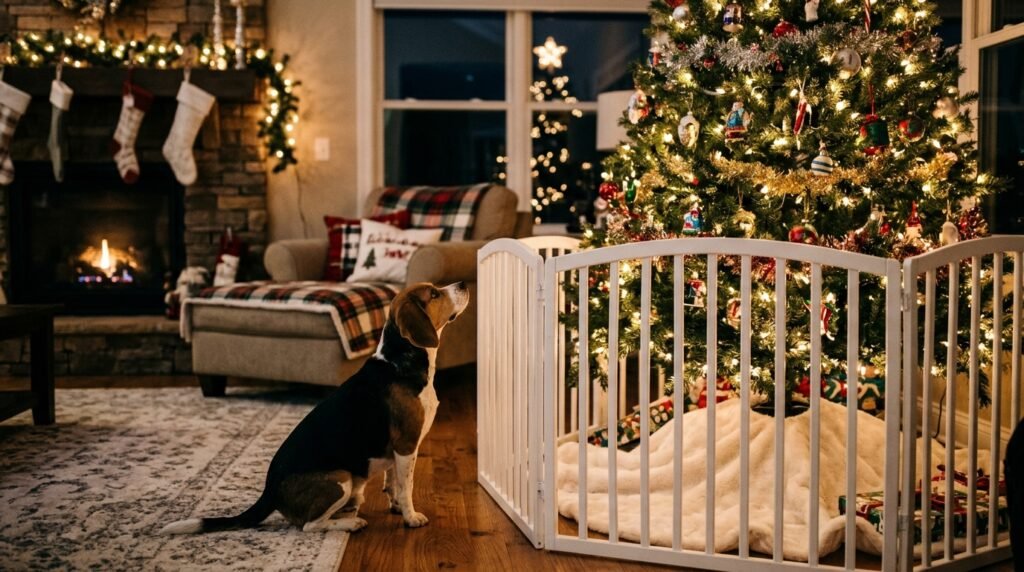
- Try a small baby gate or playpen around the tree, especially for puppies.
4. Holiday Plants
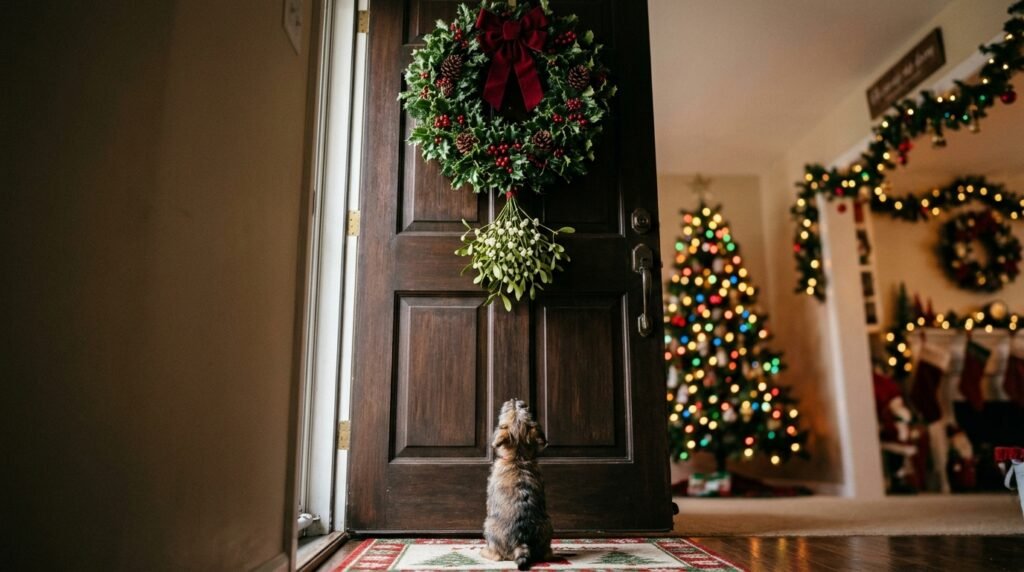
Many plants used for decoration are not safe for dogs.
- Mistletoe and holly: These are the most worrying. They can cause vomiting, drooling and stomach upset, and mistletoe in larger amounts can affect the heart.
- Poinsettia: This one has a bad reputation, but it is usually only mildly irritating. It can cause drooling or a little vomiting, but it’s still best kept out of reach.
- Real pine and fir branches: Wreaths and garlands can be chewed too, and they shed needles.
What to do:
- Hang wreaths and mistletoe high up where your dog can’t jump or reach.
- Consider using artificial plants, but check that they aren’t falling apart into small chewable pieces.
- If your dog chews a plant and you aren’t sure what it was, take a photo of it. This helps your vet.
5. Rich Food, Leftovers and Table Scraps
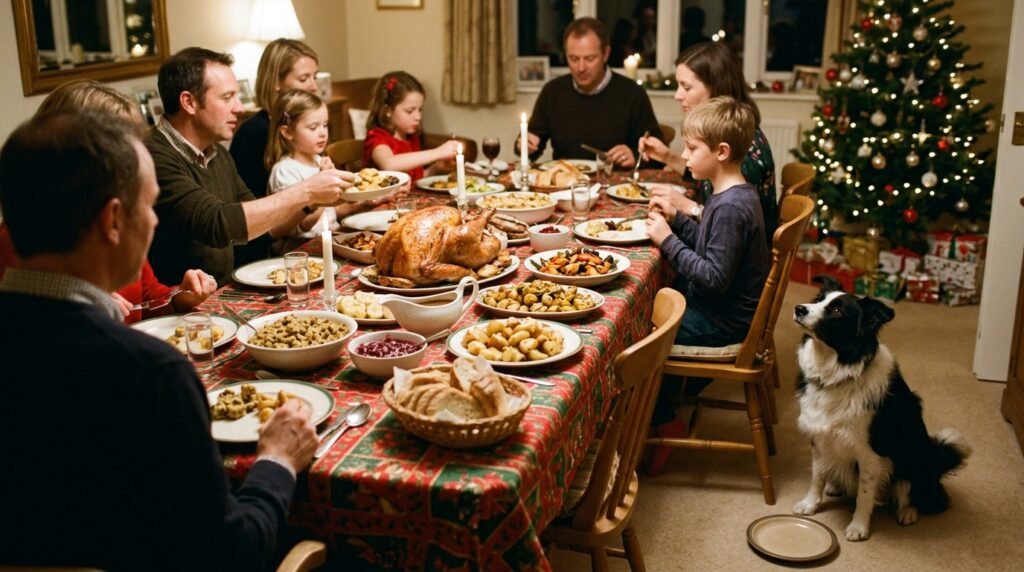
Christmas dinner is the biggest temptation of the day. Many holiday foods are not safe for dogs, and a few can be very dangerous:
- Fatty foods like gravy, turkey skin and ham can cause pancreatitis, which is painful and serious.
- Cooked bones can splinter and hurt the mouth, throat or stomach.
- Grapes, raisins and currants (found in fruit cakes and mince pies) can cause kidney damage in some dogs.
- Onions, garlic and chives in stuffing and sauces can damage red blood cells.
- Xylitol, a sweetener found in some candy, gum, baked goods and peanut butter, is extremely toxic to dogs. Always check labels.
- Alcohol in drinks, eggnog or desserts is dangerous for dogs, even in small amounts.
What to do:
- Tell family and guests clearly: no feeding the dog from the table.
- Put the trash in a closed bin or a cupboard. Dogs are great at finding turkey bones.
- Give your dog its own safe treat during dinner so it doesn’t feel left out. Plain cooked turkey meat without skin, seasoning or bones is fine in small amounts.
6. Ornaments, Candles and Salt Dough Decorations
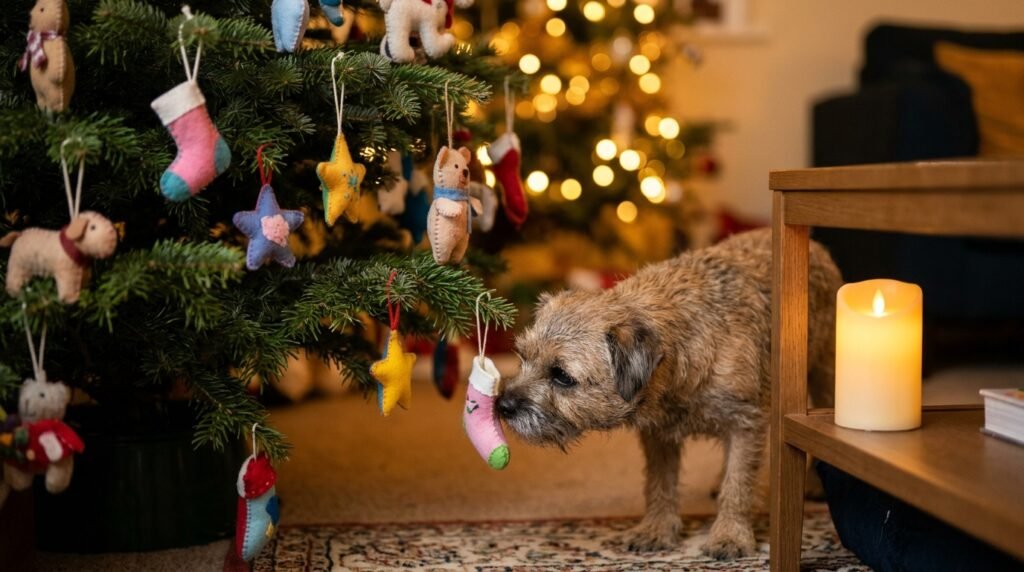
Ornaments hang at the perfect height for a wagging tail. Glass ones can break into sharp pieces, and plastic ones can be swallowed. Candles can burn a nosy dog or get knocked over. And homemade salt dough ornaments, which are very popular, can cause serious salt poisoning if a dog eats them.
What to do:
- Hang breakable and special ornaments higher up, and keep the lower branches for unbreakable ones.
- Use flameless LED candles instead of real ones.
- Keep salt dough ornaments well out of reach, or skip them.
- Avoid potpourri and scented oils, which can also upset a dog’s stomach.
When to Call the Vet
Don’t wait and hope your dog will be fine. Call your vet or an emergency clinic right away if you notice:
- Repeated vomiting or diarrhea
- Shaking, weakness or trouble walking
- Swollen or painful belly
- Heavy drooling or difficulty breathing
- Pale gums or collapse
- You know or suspect your dog ate something toxic
Keep your regular vet’s number and your nearest 24-hour emergency clinic saved in your phone before the holidays, since many clinics have shorter hours on Christmas Day. In the US, you can also contact the ASPCA Animal Poison Control Center (888-426-4435) or Pet Poison Helpline (855-764-7661). A consultation fee may apply. If you live elsewhere, look up your local animal poison service in advance.
This article is for general information only and does not replace advice from your veterinarian.
Quick Christmas Safety Checklist
- [ ] Chocolate and sweets stored high up
- [ ] No tinsel, and ribbons kept out of reach
- [ ] Tree secured and the water covered
- [ ] Cords taped down or covered
- [ ] Mistletoe and holly out of reach
- [ ] Guests told not to feed the dog
- [ ] Trash covered or closed away
- [ ] Vet and emergency numbers saved
Final Thoughts
You don’t have to give up on a beautiful Christmas to keep your dog safe. A few small changes, like moving the sweets, covering the tree water and skipping the tinsel, can prevent most holiday emergencies. Give your dog a safe place to rest, plenty of exercise, and its own special treat, and everyone can enjoy the day.
Frequently Asked Questions :
Is poinsettia really poisonous to dogs?
Poinsettia is much less dangerous than most people think. If a dog chews it, it can cause drooling, mouth irritation or mild vomiting, but serious poisoning is rare. Still, it is best to keep it out of reach. If your dog eats a lot of it or seems unwell, call your vet.
How much chocolate is dangerous for a dog?
It depends on the type of chocolate, the amount eaten and your dog’s weight. Dark and baking chocolate are far more dangerous than milk chocolate. Don’t wait for symptoms to appear. Call your vet or a poison helpline right away and tell them what and how much your dog ate.
Can dogs eat Christmas turkey?
A small amount of plain, cooked turkey meat is usually fine. Remove the skin, bones and seasoning first, because fat, onions, garlic and cooked bones can all cause problems. Never give stuffing, gravy or leftovers that were cooked with these ingredients.
Are real Christmas trees safe for dogs?
Real trees are not highly toxic, but they come with small risks. Dogs can get an upset stomach from the tree water or from swallowing pine needles. Cover the tree stand, sweep up fallen needles daily and secure the tree so it can’t tip over. Many owners use a baby gate around the tree, especially with puppies.
What should I do if my dog eats tinsel or ribbon?
Don’t try to pull it out if you can see a piece hanging from your dog’s mouth or back end, as this can injure the intestines. Call your vet right away. Tinsel and string can cause a blockage that sometimes needs surgery, so quick action matters.
How do I stop my dog from chewing Christmas lights and cords?
Tape the cords along the wall or cover them with cord protectors, and keep them as far from the floor as you can. Unplug the lights when you’re not at home. Give your dog a safe chew toy to keep it busy, and watch young puppies closely near the tree.